
Article: Do You Need Moisturizer AND Sunscreen? Complete Layering Guide
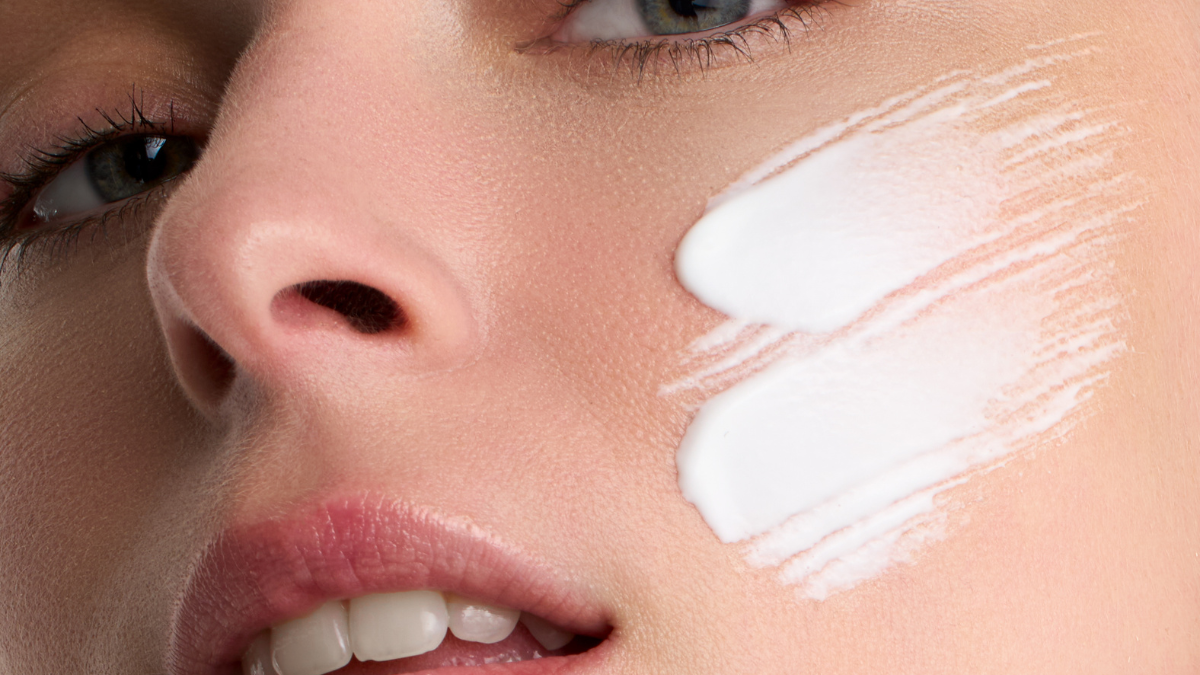
Do You Need Moisturizer AND Sunscreen? Complete Layering Guide
Short answer: yes, you need both. Moisturizer repairs your skin barrier. Sunscreen shields it from UV. Neither replaces the other, and using only one creates a problem the other was designed to solve.
At Embryolisse, we have been making the Lait-Crème Concentré, our multifunction moisturizer trusted by makeup artists and dermatologists, since 1950. Here is what we get asked most about layering it with sunscreen.
Do I need moisturizer if I wear sunscreen every day?
Yes. Sunscreen filters UV. It does not hydrate, repair, or soothe the skin barrier. Many SPF formulas are actively drying. Wearing sunscreen without moisturizer underneath leaves your skin tight, dehydrated, and more reactive over time.
→ Moisturizer and sunscreen do different jobs. You need both.
Do I need sunscreen if my moisturizer is really good?
Yes. Even the best moisturizer does not filter UV rays. Skipping sunscreen because your moisturizer is "doing everything" means you are caring for skin that is being photodamaged faster than any cream can repair. Wrinkles, dark spots, uneven tone, and skin cancer risk come from UV exposure, not dehydration.
→ A moisturizer is skincare. A sunscreen is protection. Both are non-negotiable.
Which goes first, moisturizer or sunscreen?
Moisturizer first, sunscreen last. This is the order dermatologists recommend and the order every serum, cream, and SPF label assumes.
The correct sequence for daytime:
- Cleanse
- Serum (if you use one)
- Moisturizer (like the Lait-Crème Concentré)
- Wait 2 to 3 minutes for absorption
- Sunscreen as your final skincare step
- Makeup on top, if any
- Sunscreen goes last
Sunscreen is the last skincare step because it needs to sit on the surface of your skin to form a protective film. Additional skincare (extra creams, serums, oils) applied over sunscreen dilutes that film.
Makeup is different: applied gently after the SPF has set for 1 to 2 minutes, it sits on top of the film without breaking it. Rule of thumb: nothing hydrating or treatment-focused goes over your SPF. Foundation, powder, blush, and lipstick are fine on top.
How long should I wait between moisturizer and sunscreen?
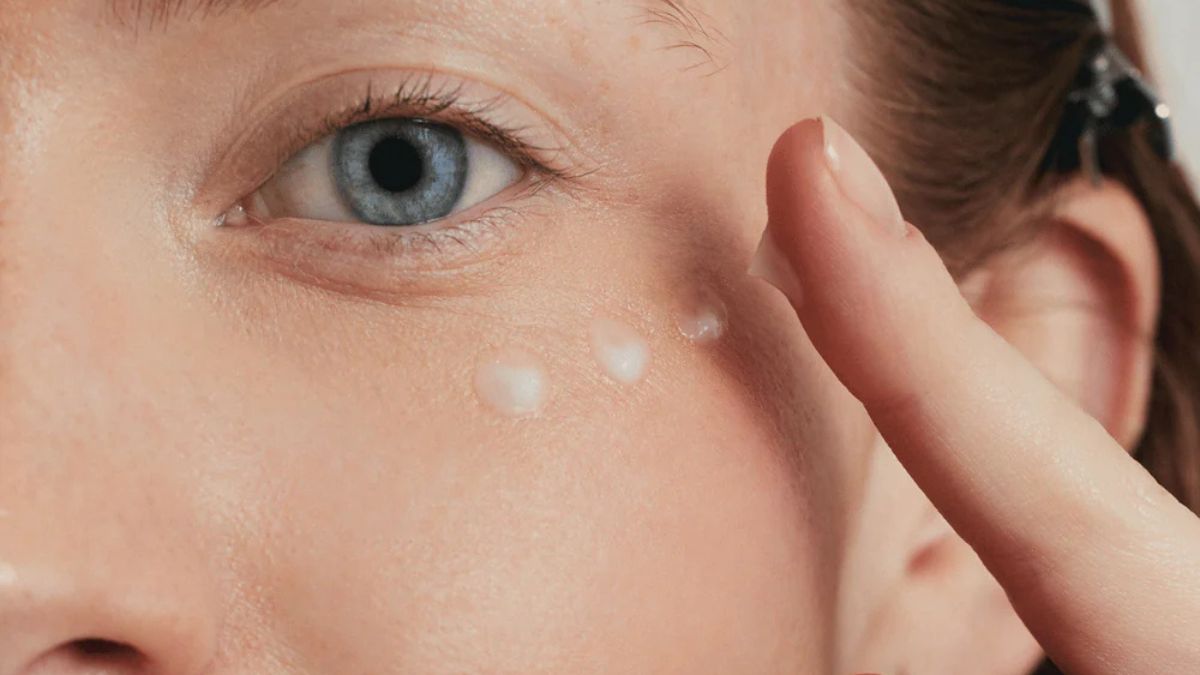
Two to three minutes. Long enough for your moisturizer to absorb, short enough that your routine does not fall apart. If your moisturizer is still tacky when you apply sunscreen, the two products will mix, and the SPF film will not form properly.
→ Rule: if your finger comes away dry when you press your cheek, you are ready for SPF.
Can I mix my moisturizer and sunscreen together in my hand?
No. Mixing dilutes the sunscreen film and the rated SPF drops significantly. The 30 or 50 on the bottle assumes you applied that sunscreen as its own distinct layer at the correct density (about 1/4 teaspoon for the face).
→ Cutting it with any other product, even a good moisturizer, means you are wearing less protection than the label promises. Apply them in separate steps, always.
Is a moisturizer with SPF enough on its own?
Yes, BUT ONLY if you apply it like sunscreen, not like moisturizer.
A moisturizer with SPF delivers exactly the protection printed on the label, but only if you apply it at sunscreen dose (about 1/4 teaspoon for the face), not the smaller amount most people use for regular moisturizer. The issue is never the product. It is the dose.
Apply your moisturizer-SPF at proper sunscreen quantity, and you are wearing the full rated protection. Apply it at moisturizer quantity (a pea-sized amount), and you are wearing about one-third of it.
Two approaches both work:
- Use a moisturizer with SPF, applied at sunscreen density (1/4 teaspoon for the face). This is exactly what our Lait-Crème Concentré SPF 30, sold in the European market, is designed for.
- Use a regular moisturizer plus a dedicated sunscreen layered on top. This is what we recommend for our US customers, where the SPF version of the Lait-Crème Concentré is not available (see the next question for why).
Either approach protects your skin. The one that fails is treating a moisturizer-SPF like a regular moisturizer and assuming you are covered.
Does moisturizer help sunscreen work better?
Yes. A healthy, well-hydrated skin barrier holds onto sunscreen better than a dry, compromised one. Skin that is tight, flaky, or dehydrated causes sunscreen to sit unevenly and wear off faster. Moisturizer underneath creates a smooth, hydrated canvas that lets your SPF distribute evenly and stay put through the day.
→ This is why "just SPF" routines often break down by mid-afternoon while "moisturizer + SPF" routines hold.
Can I use Lait-Crème Concentré, Sensitive, Retinol-like or Fluid+ under sunscreen?
Yes. The entire Lait-Crème Collection is designed to work as a base layer under sunscreen and makeup. Each formula hydrates and softens skin without leaving residue, so your SPF applies smoothly and evenly on top. Choose the one that fits your skin type.
Lait-Crème Concentré is our flagship since 1950, a multifunction moisturizing cream made with aloe vera and shea butter. It does six jobs in one tube: moisturize, prime skin for makeup, remove makeup, soothe after sun, soothe after shaving, and use as a nourishing mask. It has been the go-to base for makeup artists since 1950 for exactly this reason: it plays well under everything, including sunscreen. Best for normal to dry skin.
Lait-Crème Retinol-Like is the anti-aging version, formulated with a plant-based retinol alternative. It targets fine lines and skin renewal without the sensitivity that comes with traditional retinol. It layers under sunscreen the same way as the Concentré. Best for skin concerned with fine lines and photoaging.
Lait-Crème Fluid+ is the lightweight fluid version. Same barrier support as the Concentré, in a lighter texture that does not feel heavy under SPF or makeup. Best for oily, combination, or humid-climate skin.
Lait-Crème Sensitive is the fragrance-free version of the Lait-Crème line. Same barrier-support properties as the Concentré, formulated without added fragrance for reactive or easily irritated skin. Best for sensitive, reactive, or fragrance-avoiding skin.
→ Apply a small amount of whichever version fits your skin, let it absorb for 2 to 3 minutes, then layer your sunscreen.
Which Lait-Crème is right for my skin type?
Product |
Best for |
Key feature |
| Lait-Crème Concentré | Normal to dry skin, all skin types | Multifunction hero since 1950, 6 uses in one tube |
| Lait-Crème Retinol-Like | Anti-aging, fine lines, photoaging concerns | Plant-based retinol alternative, no sensitivity |
| Lait-Crème Fluid+ | Oily, combination, humid-climate skin | Lightweight fluid texture, non-heavy under SPF and makeup |
| Lait-Crème Sensitive Sensitive | reactive, fragrance-avoiding skin | Fragrance-free version of the Concentré formula |
→ All four layer under sunscreen the same way: apply, wait 2 to 3 minutes, then apply your SPF.
What kind of sunscreen pairs best with the Lait-Crème Concentré, Sensitive, Retinol-Like, or Fluid+?
Any FDA-approved sunscreen you like. Every product in the Lait-Crème collection absorbs cleanly and does not pill or interfere with SPF formulas. All four work under mineral (zinc oxide, titanium dioxide) and chemical sunscreens equally well.
For SPF choice: if you have sensitive or reactive skin, look for a mineral sunscreen (and pair it with the Lait-Crème Sensitive for the gentlest routine). If you want an invisible finish, chemical sunscreen layers more transparently. Both types work over any Lait-Crème formula.
Why doesn't Embryolisse sell sunscreen in the US?
We sell SPF in Europe but, due to differences in SPF regulations between Europe and the United States, the SPF version of the Lait-Crème Concentré is not available in the US market.
We truly believe in the efficacy of our unique formulas, as do our loyal customers, which is why we maintain our original formulations rather than adapting them to meet different local regulations.
The good news is that any Lait-Crème formula pairs beautifully with your favorite FDA-approved SPF. Layer the Lait-Crème first, let it absorb, then apply your preferred broad-spectrum sunscreen on top. Continue with makeup or go about your day. The nourishing base actually helps sunscreen apply more smoothly and evenly, making it a great daily companion.
Do dermatologists recommend moisturizer before sunscreen?
Yes. Every major dermatology association (American Academy of Dermatology included) recommends applying moisturizer before sunscreen. The order is standard: cleanse, treat, moisturize, protect.
The reasoning is consistent across professional guidance: moisturizer supports the barrier, sunscreen protects from UV and layering them in that order gives both products the physical conditions they need to work.

Do I need SPF if I stay indoors all day?
Yes, if you sit near windows. UVA rays (the ones that cause premature aging and cellular damage) pass through window glass. UVB rays (the ones that cause visible sunburn) largely do not. If your workspace, kitchen, or living area has any window exposure, you are getting UVA every hour you are near it.
For fully windowless indoor days (no windows, no driving, no outdoor time), you can technically skip SPF. Most people cannot honestly claim that. The safer default: daily SPF regardless of your day plan to avoid sun damage.
Can I skip moisturizer at night if I'm not going outside?
No. Nighttime is when your skin repairs itself, and it needs hydration to do that job. Skipping moisturizer at night gives your barrier no support during the exact hours it is working hardest to rebuild.
→ You can skip sunscreen at night. You cannot skip moisturizer.
Quick reference: moisturizer vs sunscreen
Moisturizer |
Sunscreen |
|
| Main job | Hydrate, repair barrier | Filter UV rays |
| When to apply | Morning and night | Morning (reapply every 2 hours) |
| Order in routine | Before SPF | Last skincare step, before makeup |
| Protects from UV? | No | Yes |
| Hydrates skin? | Yes | No (Many are drying) |
| Can replace the other? | No | No |
The routine, one more time
Morning:
- Cleanse
- Apply Lait-Crème Concentré, let absorb 2-3 minutes
- Apply FDA-approved sunscreen as final skincare step
- Makeup, if any, on top
Evening:
- Remove makeup (the Lait-Crème Concentré works for this too)
- Cleanse
- Apply Lait-Crème Concentré as your nighttime moisturizer
- Sleep
That is the whole system. Two products doing two different jobs, in the right order, every day.
The essentials, of skincare + sunscreen layering in 8 quick answers
Do I need moisturizer AND sunscreen?
Yes. Moisturizer hydrates and repairs the skin barrier. Sunscreen filters UV rays. They do different jobs and cannot replace each other.
Which goes first, moisturizer or sunscreen?
Moisturizer first, sunscreen last in your skincare routine. Apply moisturizer, wait 2-3 minutes for absorption, then apply sunscreen as your final skincare step.
How long should I wait between moisturizer and sunscreen?
Two to three minutes. Long enough for the moisturizer to absorb so it does not mix with your sunscreen. Test by pressing your cheek: if your finger comes away dry, you are ready for SPF.
Can I mix moisturizer and sunscreen together?
No. Mixing dilutes the sunscreen film and reduces the rated SPF significantly. Apply them as separate layers, always.
Is a moisturizer with SPF enough sun protection?
Yes, if applied at sunscreen dose (about 1/4 teaspoon for the face). Most people apply moisturizer-SPF products at moisturizer dose, wearing about one-third of the rated SPF. Either dose your moisturizer-SPF as sunscreen, or use a separate moisturizer with sunscreen layered on top.
Can I use Lait-Crème Concentré under sunscreen?
Yes. The Lait-Crème Concentré is designed as a multifunction moisturizer that layers cleanly under sunscreen and makeup. The same is true for the Lait-Crème Sensitive, Retinol-Like, and Fluid+. Apply, wait 2-3 minutes, then apply your SPF.
Which Lait-Crème is right for my skin type?
Lait-Crème Concentré is the flagship multifunction cream for normal to dry skin. Lait-Crème Sensitive is the fragrance-free version for reactive or fragrance-avoiding skin. Lait-Crème Retinol-Like is the anti-aging version for skin concerned with fine lines and photoaging. Lait-Crème Fluid+ is the lightweight fluid version for oily, combination, or humid-climate skin. All four layer cleanly under sunscreen.
Why doesn't Embryolisse sell sunscreen in the US?
Due to differences in SPF regulations between Europe and the United States, the SPF version of the Lait-Crème Concentré is not available in the US market. Embryolisse maintains its original formulations rather than adapting them to meet different local regulations. The Lait-Crème Concentré pairs beautifully with any FDA-approved SPF layered on top.
Shop the routine
The Lait-Crème Concentré is $34 and has been the base layer trusted by makeup artists, dermatologists, and skincare-first customers since 1950. One 2.6 fl oz tube lasts most people 3 to 4 months.
For sensitive, reactive, or fragrance-avoiding skin, try the Lait-Crème Sensitive. For anti-aging concerns, try the Lait-Crème Retinol-Like. For oily, combination, or humid-climate skin, try the Lait-Crème Fluid+. All four layer the same way under sunscreen.
SHOP LAIT-CRÈME CONCENTRÉ SHOP LAIT-CRÈME SENSITIVE SHOP LAIT-CRÈME RETINOL-LIKE SHOP LAIT-CRÈME FLUID+ SHOP THE FULL LAIT-CRÈME COLLECTION

Leave a comment
This site is protected by hCaptcha and the hCaptcha Privacy Policy and Terms of Service apply.