
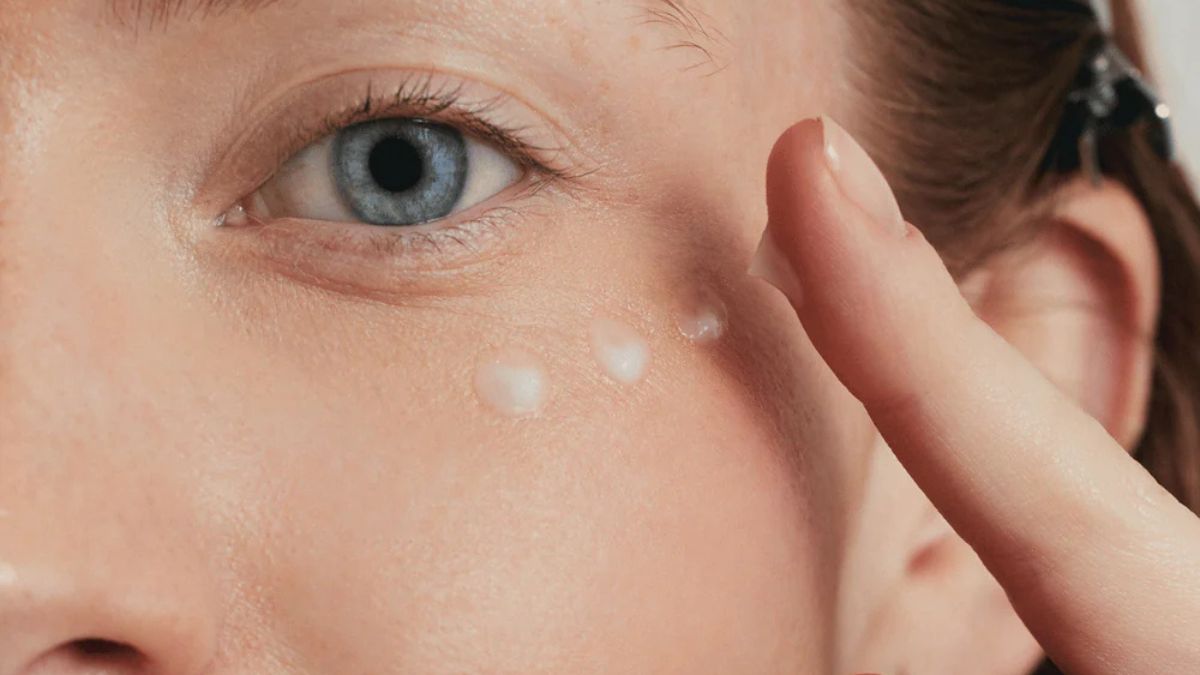
How to Treat Wrinkles, Dark Circles, and Bags Around Your Eyes
The eye area is usually the first place people notice change. A late night shows up under the eyes before it shows up anywhere else. Fine lines around the corners deepen years before the cheeks see anything. Dark circles can appear in your twenties and stick around regardless of how much sleep you get.
There is a reason for all of this. The skin around the eyes is the thinnest on the entire face. It has fewer oil glands, less collagen support, and it moves constantly with every blink, every smile, every squint. A regular face moisturizer is not built for that environment.
This guide covers the three eye concerns that almost everyone asks about: wrinkles, dark circles, and under-eye bags. What causes each, what actually helps, and how to put together a real anti-aging eye care routine.

Why the eye area needs its own product
The skin around the eyes is roughly 0.5 mm thick, compared to about 2 mm on the rest of the face. That single fact explains most of what happens here.
Thinner skin means faster moisture loss. Without a strong barrier, hydration evaporates quickly and fine lines appear faster.
-
Fewer sebaceous (oil) glands. The eye area produces almost no natural lubrication. Dryness is the default state.
- Less collagen and elastin support. The structural proteins that keep skin firm are present in lower density here. They break down sooner and are slower to rebuild.
-
Constant movement. Every blink, smile, or squint creates micro-folds. Over years, these become permanent expression lines.
-
Closer to blood vessels. The thinner skin shows the color of the blood and tissue underneath. That is why under-eye darkness is so visible.
A standard face moisturizer can be too rich (causing milia, the small white bumps), too active (causing irritation), or simply not targeted to the specific problems that show up here. An eye contour product is formulated for the thinner skin, the specific concerns, and the gentler application this area requires.
What causes wrinkles around the eyes (and what helps)
Wrinkles around the eyes come from four main sources:
- Expression lines from repeated muscle movement (the classic "crow's feet")
- Sun damage that breaks down collagen and elastin over time
- Dehydration that makes fine lines more visible
- Loss of natural collagen that begins in your mid-twenties and accelerates after 40

What actually helps:
- Peptides: short chains of amino acids that signal the skin to produce more collagen. Multiple studies show peptide-rich formulas can reduce the appearance of fine lines over 8 to 12 weeks of use.
- Hyaluronic acid: holds up to 1,000 times its weight in water. Plumps fine lines from the inside by restoring hydration.
- Retinol or retinol alternatives: accelerate cell turnover and stimulate collagen production. Retinol itself can be irritating for the eye area, so many eye-specific formulas use gentler retinol-like ingredients.
- Antioxidants (vitamin C, vitamin E): neutralize free radicals from UV exposure and pollution that accelerate visible aging.
- Daily SPF: the single most effective anti-aging step for any part of the face. Eye area especially.
The product needs to deliver these actives in a formula gentle enough for the thinner skin. A facial serum at full strength is often too harsh for the under-eye.
What causes dark circles (and what helps)
Dark circles are actually three different types, and each needs a different approach.
Type 1: Pigmentation circles
Pigmentation circles are brown or tan in color, caused by melanin buildup. Common in deeper skin tones and after sun exposure or rubbing.
→ What helps: Vitamin C, niacinamide, kojic acid, daily SPF.
Type 2: Vascular circles
Vascular circles are blue, purple, or pinkish in color, caused by blood vessels showing through the thin skin. Often worse when tired or dehydrated.
→ What helps: Caffeine (constricts blood vessels), vitamin K (improves circulation), cold compresses, hydration.
Type 3: Structural circles
Shadows cast by the natural shape of the eye socket. These do not respond to topical products.
→ What helps: Better lighting, makeup highlighting, or in extreme cases, dermatological treatments.

Most people have a combination of types. A good eye contour care can address Types 1 and 2 directly. Type 3 is a structural reality, not a skincare problem.
Worth noting: lack of sleep and dehydration make all three types look worse temporarily. Eye products help, but the basics (rest, water, sun protection) do most of the heavy lifting.
What causes under-eye bags (and what helps)
Under-eye bags fall into two categories:
Temporary puffiness from fluid retention. Caused by salt, alcohol, hormones, allergies, or sleeping flat. This is what looks worse in the morning and improves by afternoon. What helps: Caffeine, cold compress, sleeping with the head slightly elevated, reducing salt and alcohol, hydration.
Permanent fat displacement. As the structural support of the under-eye area weakens with age, the fat pad that normally sits behind the orbital bone can push forward, creating a permanent pouch. This is not treatable with topical products. Only cosmetic procedures (filler, surgery) address it.
→ The good news: most under-eye bags in younger and middle-aged faces are the temporary fluid-retention type. A targeted eye product with caffeine and depuffing actives, applied with cool fingertips or a metal applicator, can visibly reduce morning puffiness within minutes.
Building an eye care routine (AM and PM)
The order of application matters. Eye contour products are typically lightweight and should go on bare or freshly cleansed skin, before heavier products.
Morning (AM) routine:
- Gentle cleanse
- Eye contour care: apply a small amount around the eye area (do not pull or rub)
Serum - Moisturizer (Lait-Crème Concentré is the multi-function classic, or Lait-Crème Sensitive for reactive skin)
- SPF: critical, especially for the eye area
Evening (PM) routine:
- Double cleanse (makeup remover, then gentle cleanser)
- Eye contour care
- Treatment serum (retinol, vitamin C, or other actives: applied to the face, avoiding direct eye area)
- Night moisturizer
→ Application technique: Use your ring finger (lightest natural pressure). Pat or press the product around the orbital bone. Do not pull or drag. Allow 60 seconds to absorb before layering the next product.

Introducing the new Smoothing Eye Contour Care
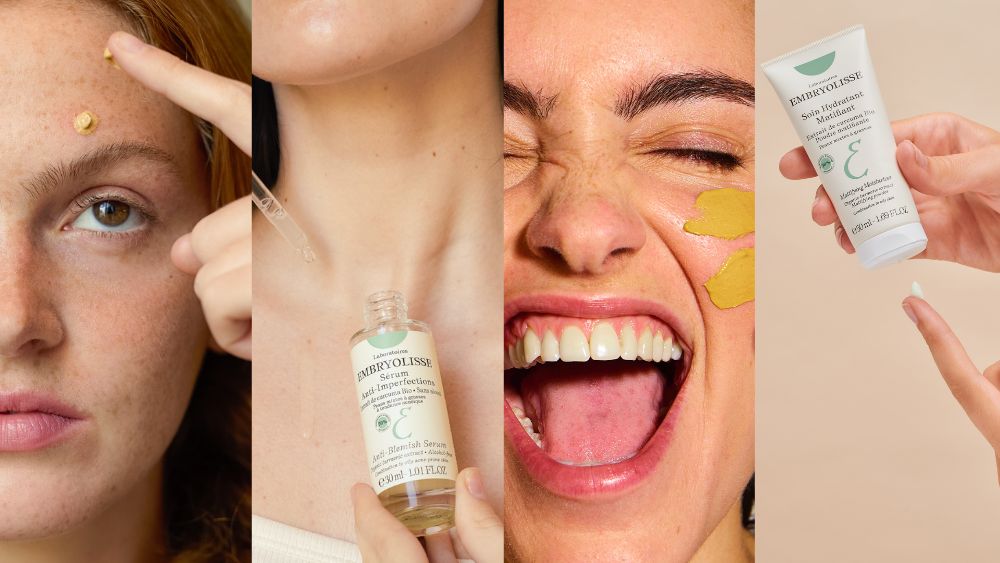
The new Smoothing Eye Contour Care from Embryolisse is a multi-function eye treatment designed to address all three concerns covered above: wrinkles, dark circles, and under-eye bags. One product, one application step, three results.
The formula is built around two botanical hero actives, supported by hydrating and skin-conditioning ingredients. It is vegan, fragrance-free, and 98% of the ingredients are from natural origin.
Organic Great Yellow Gentian Extract (Gentiana Lutea)
This is the multi-tasking hero ingredient. A botanical extract from the root of the great yellow gentian flower, it does three things at once. Which is exactly what makes a single eye contour care effective against all three concerns:
- Stimulates collagen to help smooth the appearance of fine lines
- Reduces the appearance of dark circles
- Decongests puffiness
One ingredient. Three concerns. This is the active that justifies the multi-function positioning. Most eye creams need three or four different actives to address wrinkles, dark circles, and puffiness separately. The Great Yellow Gentian Extract handles all three from a single botanical source.
→ The same multi-function philosophy runs through our full anti-aging skincare collection.
Sacred Lotus Flower Extract (Nelumbo Nucifera)
The second hero active comes from the flower of the sacred lotus. Its job in this formula is to soothe skin sensitivity and reduce redness. The eye area is one of the most reactive zones on the face, and a smoothing or depuffing product that irritates the skin defeats its own purpose. The lotus extract is what makes this formula safe for sensitive skin, the same approach behind Lait-Crème Sensitive for the rest of the face.
Sodium Hyaluronate, Vitamin E, Skin-conditioning emollients
Standard hydration workhorse, antioxidant protection, and silky lightweight texture. (Full descriptions in the file.)

What good eye contour care can (and can't) do
The eye area is the first place to show stress, sleep loss, sun damage, and time. It also responds, more than most parts of the face, to targeted care.
A good eye contour care will not erase years overnight. What it will do is make wrinkles less visible, brighten the under-eye, depuff in the morning, and protect against further damage. Consistent twice-daily use is what produces results.
The new Smoothing Eye Contour Care is Embryolisse's answer to the three most common eye concerns in one tube. Multi-function. French dermo-cosmetic. Made for the part of your face that needs the most attention and gets the least.

Leave a comment
This site is protected by hCaptcha and the hCaptcha Privacy Policy and Terms of Service apply.